
In today’s fast-paced and demanding world, stress, anxiety, and mental fatigue have become increasingly common. Many people are searching for ways to calm their minds, enhance focus, and improve overall well-being. One of the most effective and time-tested solutions is meditation. Meditation is not just a method for relaxation—it is a holistic practice that nurtures the mind, body, and soul.
In this article, we will explore the top meditation practices that can help you reduce stress, increase self-awareness, and cultivate inner peace.
1. Mindfulness Meditation
Mindfulness meditation is one of the most widely practiced forms of meditation around the world. It emphasizes being fully present in the moment, observing thoughts, feelings, and bodily sensations without judgment. This practice allows individuals to cultivate awareness, calmness, and clarity.
How to Practice:
- Find a quiet and comfortable space where you can sit undisturbed.
- Sit upright with your back straight and shoulders relaxed.
- Close your eyes and focus on your breath, noticing the natural rhythm of inhaling and exhaling.
- Observe any thoughts, emotions, or sensations that arise without attaching to them.
- Gently redirect your attention to your breath whenever your mind wanders.
Benefits:
- Reduces stress and anxiety
- Improves focus, attention, and mental clarity
- Enhances emotional regulation and self-awareness
- Encourages acceptance of the present moment
Mindfulness meditation can be practiced anywhere, even for a few minutes daily, making it ideal for beginners and busy individuals.
2. Transcendental Meditation
Transcendental Meditation (TM) is a technique that involves silently repeating a mantra to quiet the mind and reach deep relaxation. TM is typically practiced for 20 minutes, twice a day, and is known for its profound effects on mental and physical health.
How to Practice:
- Sit comfortably in a relaxed position with your eyes closed.
- Silently repeat your assigned mantra—a word or phrase provided by a trained TM teacher.
- Allow thoughts and distractions to come and go without engaging with them.
- Focus gently on the mantra, allowing it to guide you into a state of deep calm.
Benefits:
- Promotes deep mental relaxation
- Reduces stress and lowers blood pressure
- Enhances creativity and problem-solving abilities
- Improves overall emotional balance
Transcendental meditation is highly structured and works best under the guidance of a trained instructor for beginners.
3. Guided Meditation
Guided meditation involves following instructions from a teacher, audio recording, or meditation app. It is particularly helpful for beginners who may struggle to meditate independently.
How to Practice:
- Choose a guided meditation session, app, or audio recording that suits your needs.
- Sit or lie down comfortably in a quiet environment.
- Listen attentively to the instructions, focusing on your breath, body, or visualization exercises.
- Follow the prompts to release tension, visualize peaceful scenarios, or practice affirmations.
Benefits:
- Helps beginners maintain focus
- Reduces stress and anxiety
- Encourages relaxation and positive thinking
- Provides structure and guidance for meditation practice
Guided meditation is an excellent starting point for those new to meditation or anyone seeking support in maintaining consistency.
You may also like to read this:
What Is Mind Wellness And Why It Matters For A Healthy Mind
How To Improve Mental Health: Simple Daily Wellness Tips
12 Types of Relaxation Techniques For Calm Mind And Body
Why Self-Care Is Important: A Complete Guide For You
20 Best Daily Wellness Habits To Boost Health And Happiness
4. Loving-Kindness Meditation (Metta)
Loving-kindness meditation (Metta) focuses on cultivating compassion, love, and goodwill toward yourself and others. This practice encourages positive emotions and strengthens social connections.
How to Practice:
- Sit comfortably and focus on your breath.
- Begin by directing loving thoughts toward yourself, using phrases like:
- “May I be happy.”
- “May I be healthy.”
- “May I be safe.”
- “May I be happy.”
- Gradually extend these thoughts to loved ones, acquaintances, and even people you find challenging.
- Visualize sending warmth and compassion to each person while repeating the phrases silently.
Benefits:
- Increases empathy and compassion toward self and others
- Reduces negative emotions like anger and resentment
- Strengthens social bonds and relationships
- Cultivates a sense of inner peace and joy
5. Body Scan Meditation
Body scan meditation focuses on developing awareness of your body by noticing sensations, tension, or discomfort. It is particularly effective for stress reduction, relaxation, and improving sleep quality.
How to Practice:
- Lie down in a comfortable position.
- Close your eyes and take a few deep breaths.
- Slowly bring your attention to each part of your body, starting from the toes and moving upward.
- Notice sensations without judgment, tension, or discomfort.
- If your mind wanders, gently redirect attention back to the body part you are focusing on.
Benefits:
- Enhances body awareness and mindfulness
- Reduces stress, tension, and anxiety
- Improves sleep quality and relaxation
- Helps release stored physical and emotional stress
6. Zen Meditation (Zazen)
Zen meditation (Zazen) is a traditional Buddhist practice emphasizing seated meditation, deep breathing, and observing thoughts without attachment. It encourages self-discipline, mental clarity, and insight.
How to Practice:
- Sit cross-legged on a cushion or chair with a straight back.
- Rest your hands in a specific mudra (hand position).
- Focus on your breathing, counting each inhale and exhale.
- Observe thoughts as they arise, allowing them to pass without judgment.
Benefits:
- Promotes mental clarity and focus
- Encourages discipline and concentration
- Deepens spiritual understanding and insight
- Cultivates calmness and presence
Zen meditation often requires guidance and patience to develop mastery over time.
7. Yoga Meditation
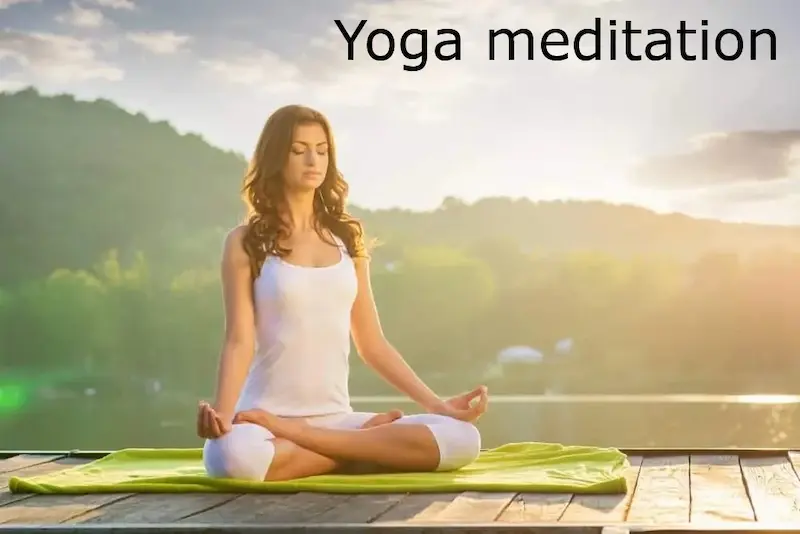
Yoga meditation combines physical postures (asanas), controlled breathing (pranayama), and meditation to harmonize the mind, body, and spirit. It is an integrative approach to overall wellness.
How to Practice:
- Perform yoga postures to release tension and improve flexibility.
- Focus on deep, rhythmic breathing throughout the practice.
- Finish with seated meditation or savasana (corpse pose) to integrate relaxation.
Benefits:
- Improves physical health and flexibility
- Calms the nervous system and reduces stress
- Enhances mind-body awareness
- Promotes overall mental and emotional balance
Yoga meditation can be practiced alone or as part of a structured yoga routine for maximum benefits.
8. Chakra Meditation
Chakra meditation focuses on the body’s energy centers (chakras) to balance emotional, mental, and physical well-being. This practice is especially beneficial for those interested in energy healing or spiritual development.
How to Practice:
- Sit comfortably and take a few deep breaths.
- Visualize each chakra, starting from the root chakra at the base of the spine and moving to the crown chakra at the top of the head.
- Imagine energy flowing freely through each chakra while repeating associated mantras or focusing on colors linked to each energy center.
- Allow yourself to feel balanced, calm, and centered.
Benefits:
- Balances emotional and mental energy
- Promotes physical healing and vitality
- Enhances spiritual awareness and inner harmony
- Increases mindfulness and body awareness
Tips for Effective Meditation
- Practice Daily: Consistency is key to experiencing the full benefits. Even 5–10 minutes a day can be transformative.
- Create a Calm Space: Find a quiet, comfortable place free from distractions.
- Focus on Your Breath: Breath is your anchor and helps maintain concentration.
- Be Patient: Meditation is a skill that develops gradually; progress may take time.
- Start Small: Begin with shorter sessions and gradually increase duration as you become more comfortable.
Conclusion
Incorporating the top meditation practices into your daily routine can significantly reduce stress, improve focus, and enhance overall well-being. From mindfulness and transcendental meditation to loving-kindness and chakra meditation, there are techniques suited for every individual. By exploring and practicing these methods, you can cultivate inner peace, emotional balance, and a deeper connection with yourself.
Meditation is more than a practice—it is a journey toward self-awareness and holistic wellness. Start today, remain consistent, and experience the transformative power of these top meditation practices.
FAQs
1. What are the benefits of meditation?
Meditation offers numerous benefits, including stress reduction, improved focus and concentration, emotional balance, better sleep, enhanced self-awareness, and overall mental and physical well-being.
2. How long should I meditate each day?
For beginners, even 5–10 minutes daily can be beneficial. As you become more comfortable, you can gradually increase to 20–30 minutes or more. Consistency is more important than duration.
3. Which meditation practice is best for beginners?
Mindfulness meditation and guided meditation are excellent starting points for beginners because they are easy to follow and do not require special training.
4. Can meditation reduce stress and anxiety?
Yes! Regular meditation practices, such as mindfulness and loving-kindness meditation, have been scientifically proven to lower stress, reduce anxiety, and improve emotional resilience.
5. Do I need a quiet place to meditate?
While a quiet environment helps with focus, meditation can be practiced anywhere. Over time, you’ll learn to meditate even in noisy or distracting environments.